Job mix captured
Application type, order size, substrate range, color tolerance and finishing equipment are documented before the printer conversation narrows.
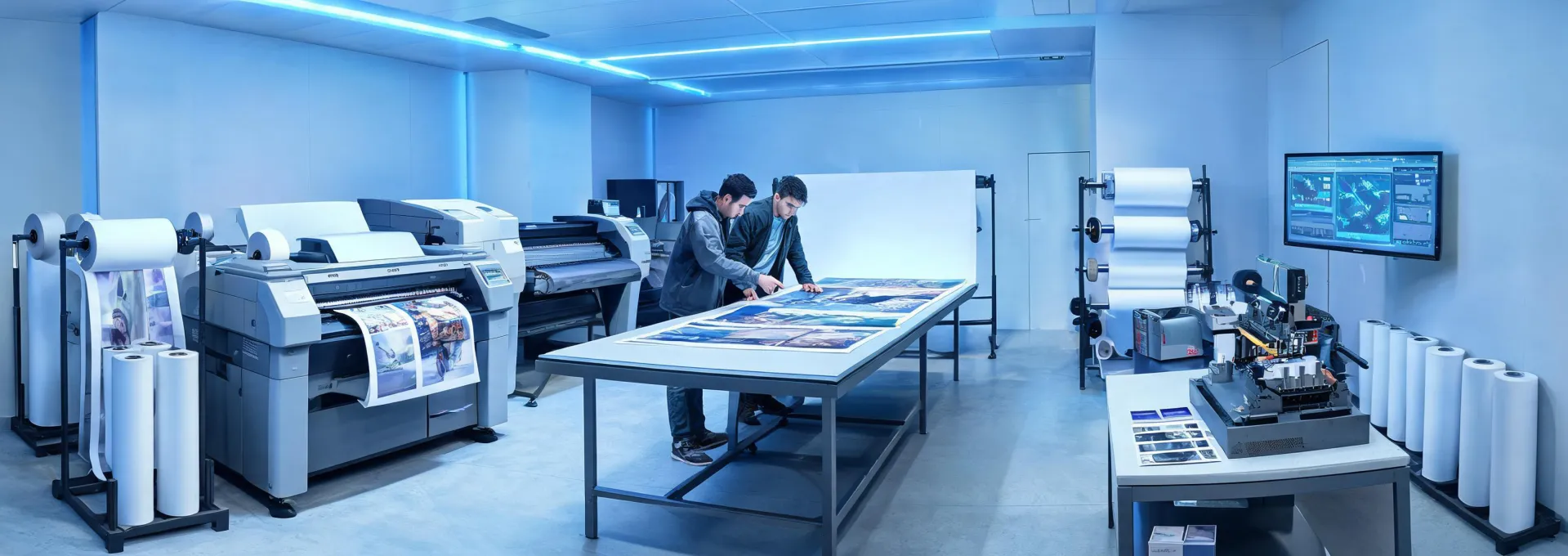
The Epson story on this site is not told as a museum timeline. It is presented as a working standard for print rooms that need measured color, repeatable machine behavior and a clear way to compare textile, graphics and industrial inkjet decisions. The brand voice is technical because the buyer's risk is technical: downtime, rejected color, wasted media, unclear maintenance ownership and equipment that does not match the real job mix.
The roadmap treats every printer installation as a chain of evidence. First, the application is defined in measurable terms: substrate, artwork coverage, color target, daily volume and finishing path. Next, the system is configured with profiles, ink routines, operator checks and maintenance intervals. Finally, the team reviews live orders to confirm whether the documented setup survives real schedule pressure. This approach is deliberately methodical because commercial print teams rarely need more slogans; they need fewer untracked variables.
Application type, order size, substrate range, color tolerance and finishing equipment are documented before the printer conversation narrows.
Output is reviewed for adhesion, hand feel, wash durability, drying behavior, edge quality or mark readability depending on the print route.
Operators receive repeatable actions for loading, nozzle checks, ink handling, profile selection, inspection and escalation.
Real orders are checked against the launch assumptions so settings can be corrected with facts instead of anecdotes.
Professional digital printing is a connected system of ink, media, software, finishing and service response. The partner grid is represented as capability areas rather than third-party brand claims, keeping the page focused on what a buyer needs to verify.
 Ink workflow
 Media profiles
 Color control
 Service response
 Finishing fit
Use the form to describe the process, not only the model name. That gives the response team enough context to speak in terms of application risk, operator routine and measurable output.