
Apparel decoration
Garment shops balance artwork variety, fabric behavior, pretreatment or powder discipline, white ink stability and customer expectations around feel and wash durability.
Each print market asks a different question of the equipment. Apparel decorators ask about white ink reliability and hand feel. Sign shops ask about media profiles and finishing. Packaging teams ask whether a sample can be approved without guessing about adhesion. Industrial marking teams ask whether the print event can follow the line without losing data or uptime.
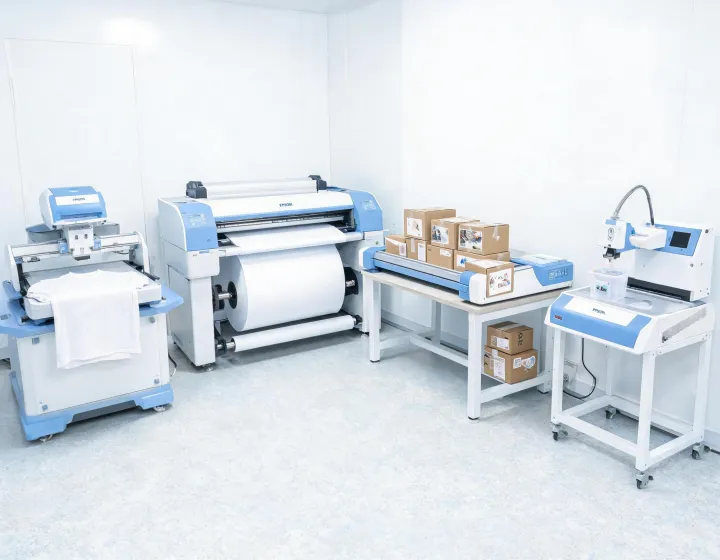
Garment shops balance artwork variety, fabric behavior, pretreatment or powder discipline, white ink stability and customer expectations around feel and wash durability.

Signage programs need reliable roll handling, profile control, drying windows and finishing compatibility across posters, banners, decals and retail campaign materials.

Sample rooms need short-run flexibility, accurate placement, material testing and a documented bridge between visual approval and later production assumptions.

Production lines care about mark readability, data triggers, environmental conditions and service intervals that do not interrupt upstream or downstream equipment.
The examples below are framed as operating scenarios rather than client stories. They show how the same printer family label can mean very different technical work depending on substrate, order cadence and approval pressure.
The team moved from general model comparison to a DTF/DTG decision matrix built around cotton content, white ink maintenance, heat press throughput and the number of artwork changes per shift.
The discussion shifted away from maximum print width and toward profile libraries, drying space, cutter timing, laminate behavior and whether operators could repeat approved campaign colors.
The UV route was evaluated through fixture design, board flatness, ink adhesion, curing setting and the amount of rework created when prototypes changed after brand review.
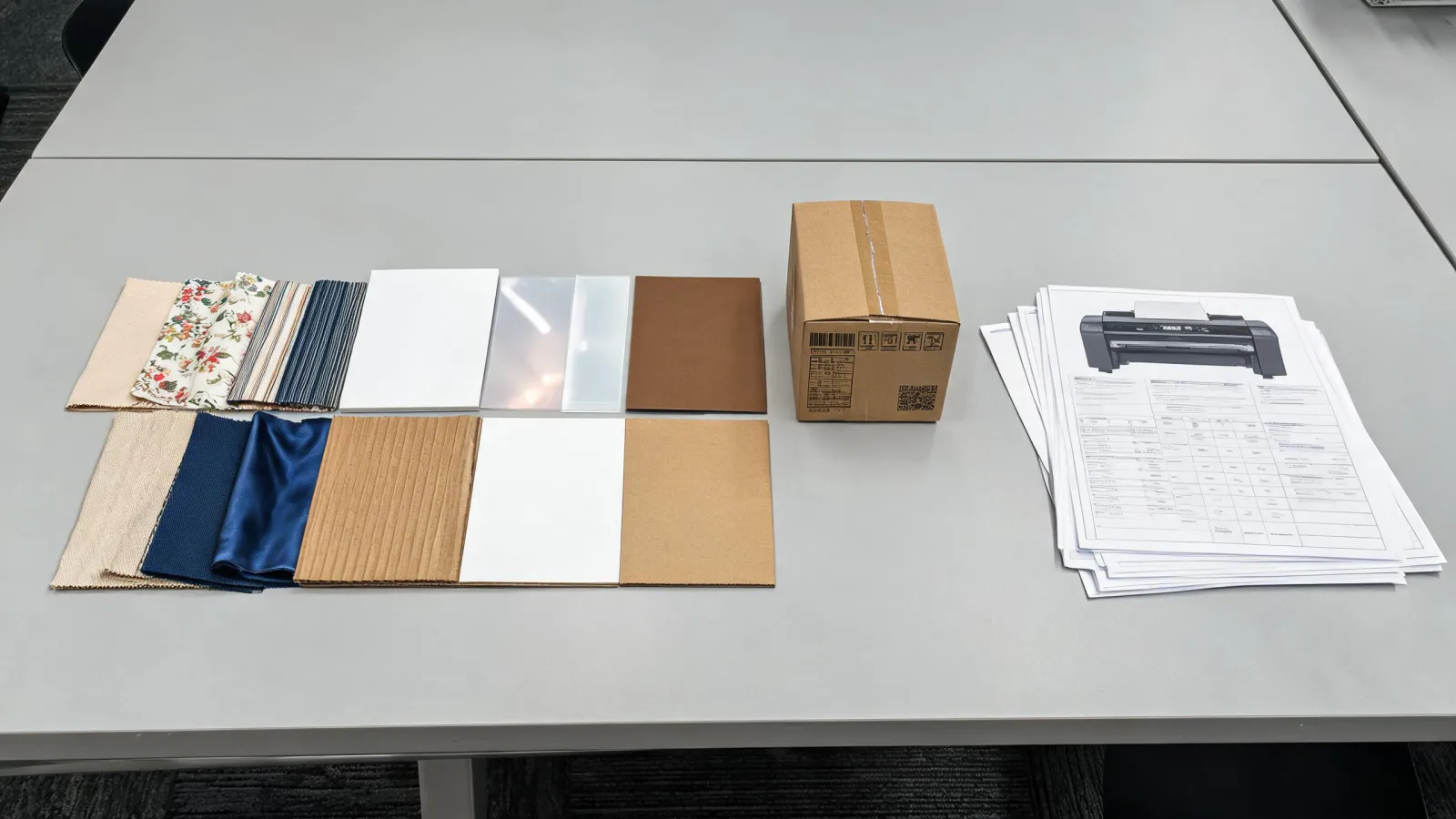
Send the application, substrate, volume and approval criteria. The response can identify which category deserves deeper testing and which variables should be documented before purchase.