White ink stability, pigment settling checks and ink age are tracked because transfer and garment quality can move quickly when the ink path is neglected.
Epson technology decisions come down to measurable behavior, not marketing language. The focus is ink delivery, printhead behavior, software settings, maintenance evidence and validation routines that help commercial teams decide whether a DTF, DTG, UV, sublimation, eco-solvent or industrial inkjet route is technically defensible.
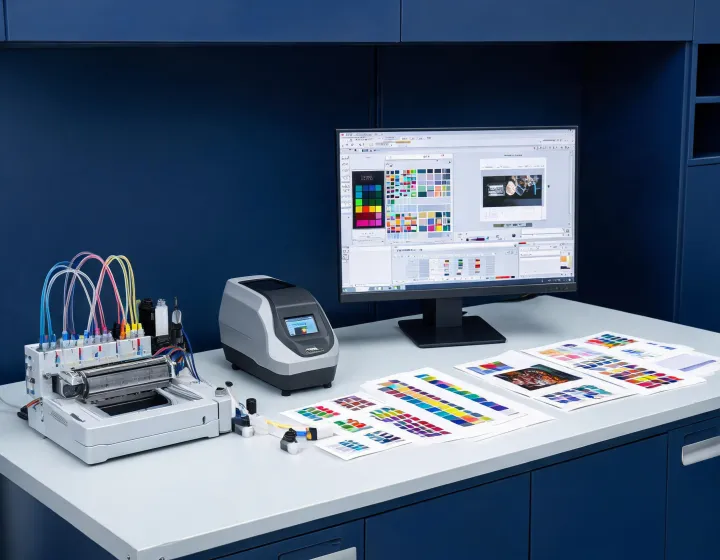
White ink stability, pigment settling checks and ink age are tracked because transfer and garment quality can move quickly when the ink path is neglected.
Daily test patterns, cap condition, wiper routine and strike evidence help separate head maintenance from media or artwork problems.
RIP settings, media profiles, ink limits and measurement habits keep approved samples from drifting when the order repeats.
Adhesion, drying, curing, heat transfer and dimensional behavior define whether a printer family fits the real material list.
The most useful technical conversation begins with evidence. Even when a shop is early in the buying process, these documents help define what must be tested and which assumptions can be retired. They also prevent teams from treating a printer family name as a complete workflow description.
Technology decisions become safer when each step produces a record. The sequence below is intentionally practical: define the application, test the substrate, stabilize the settings, assign maintenance and review live production. It is the opposite of buying by brochure; it asks the print room to prove the route before depending on it.
Identify print family, material range, artwork type, color target, daily volume and finishing method.
Run approval prints against the actual substrate and inspect adhesion, feel, wash, drying or mark readability.
Document profile, pass mode, ink limits, heat or cure condition, maintenance action and operator check.
Compare live output with the approved sample and adjust only through a recorded change path.
Send the application route, current printer behavior, substrate list and maintenance concern. A focused review can separate hardware fit, profile control and operator routine before the next investment is made.