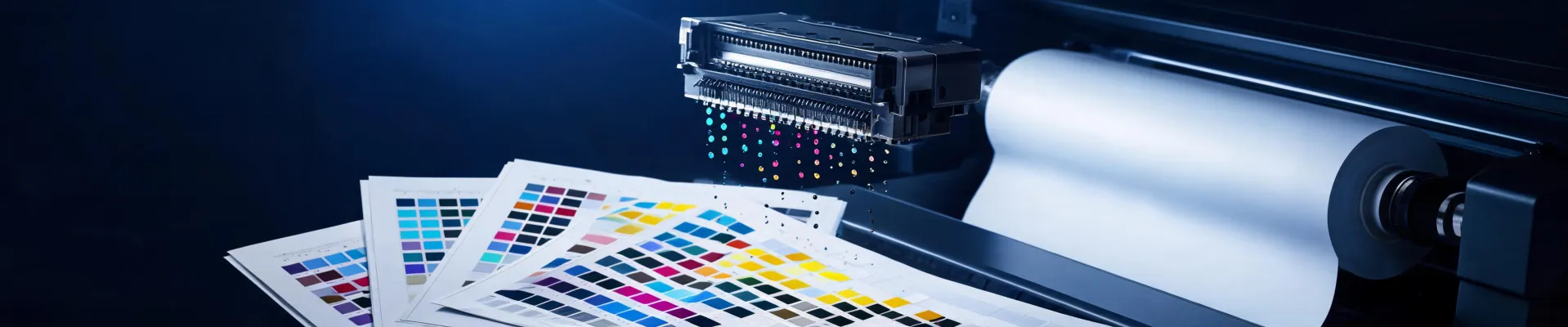
DTF or DTG Printer? A Quality Manager's Comparison Based on Wash Tests and Ink Costs
2026-09-04 · Elise Marceau
Every week someone asks the same question in a different disguise: DTF or DTG printer, which one should I buy? The thread usually starts with one shop owner, then someone brings up a Calca DTF printer they saw online, and then a third person asks whether they should get a UV printer 9060 instead. It gets messy fast.
My perspective is a little different from the typical review blog. I'm a quality and compliance manager at an apparel decoration company. I've spent the last four years checking work before it goes out the door—wash tests, stretch tests, color checks, edge-adhesion checks, the whole routine. In 2024, I rejected roughly 18% of the first production articles handed to me. So when I compare DTG and DTF, I'm comparing what survives contact with a customer's washing machine, not what looks good on a demo video.
The 30-second difference between DTF and DTG
DTG (direct-to-garment) is an inkjet process that prints pigment ink directly onto a shirt. Dark garments need a pre-treatment so the white underbase stays opaque, but the ink ends up embedded in the fabric.
DTF (direct-to-film) prints the same type of artwork onto a PET film first. You cover the wet image with adhesive powder, melt that powder, and later heat-press the transfer onto the garment. The design is carried by a thin adhesive layer rather than soaked into the fabric.
It's tempting to think they are basically two routes to the same final shirt. Put another way: if you look at them from five feet away, they often look identical. The differences show up in hand feel, process cost, edge durability, and what happens when the garment is not 100% cotton.
Wash-test results: DTG vs DTF on a cotton tee
Start with the dimension I care about most: what does the print feel like and how long does it last? In our Q4 2024 quality audit, we ran a blind touch test with 42 production and office staff. Same artwork, same dark 100% cotton blanks, one DTG print and one DTF transfer. 31 people picked the DTG print as softer, and most could not explain why.
The reason is the extra layer. A DTG print on treated cotton behaves like part of the fabric. It breathes and flexes with the weave. A DTF transfer is a laminate-style layer sitting on top of the fabric. A well-made one is still flexible, but you can feel it, especially in dense white areas or when the print covers a large panel.
Here's the counter-intuitive part: this is the exact opposite of what a lot of DTF marketing claims. DTF is softer than traditional screen print, sure. But when the choice is DTF or DTG on cotton, DTG generally wins the feel test. The exception is fabric chemistry. DTG does not bond well to polyester or most synthetic blends, while DTF sits on top and does not care what the fabric is made of. For fleece, performance fabric and blended hoodies, DTF is the more reliable option.
The most frustrating part of my job is seeing DTF edge failures that were completely avoidable. They are almost always caused by under-cured adhesive powder or poorly sealed edges. When we added a standardized 20-wash peel test in 2022, our first-pass approval rate on transfer orders rose by about a third. That tells you how many problems were hiding until the customer washed the item.
Cost per print: ink replacement is the number nobody quotes
This is where the decision usually gets made, and also where it usually gets made wrong.
If you have watched any printer conversion videos, you have probably seen someone turning an Epson 2750 printer (the EcoTank ET-2750) into a budget DTF machine. I get why it looks attractive: the Epson 2750 is an inexpensive, reliable EcoTank printer for normal document and photo printing. It was not designed to run heavily pigmented white DTF ink, and Epson does not document it as a DTF printer. That does not mean every conversion fails instantly. It means your quality depends on luck and maintenance habits, which is not a great foundation for a business.
Here is something vendors will not tell you: white pigment ink settles. Every morning, someone has to run nozzle checks and cleaning cycles to clear it. A single power cleaning can consume several times more ink than one shirt print. In our records, maintenance cycles ate somewhere between a quarter and a third of all white ink we bought for both DTG and DTF lines. When I review a shop's numbers, I look at Epson printer ink replacement frequency before I look at the price per bottle. The cheapest ink in the world does not help if your machine throws it into a waste bottle during every startup.
We ran our own head-to-head in November 2024: 30 identical dark tees, half DTG and half DTF, same artwork, same operator skill level. The consumable cost per shirt was within about $0.25 of each other, with DTG averaging $1.07 per shirt and DTF averaging $0.94. That gap was smaller than most buyers expect, and it was completely overshadowed by maintenance ink waste. If a supplier tells you one technology is obviously cheaper per print, they are probably not counting the ink that never touches the shirt.
Labor and consistency on a normal Tuesday
DTG has fewer physical handling steps. You pre-treat the dark garment, print it, and dry or cure it. The failure modes are mostly visible right away: an uneven pre-treatment, a missed pass, a nozzle out, and you can see the problem on the shirt before it ships.
DTF adds more steps between the digital file and the final garment. Print the film, apply the powder, shake off the excess, cure the powder, press the transfer, peel. Each step is a quality variable. Edge peeling, which is the failure I reject most often in DTF work, usually cannot be spotted while the transfer is still sitting in a pile. You only discover it after pressing and washing.
But DTF has a genuine efficiency advantage: film can be produced in batches. You can print fifty transfers in the morning and press them whenever orders arrive, which makes it a strong fit for on-demand and repeat work. DTG is more direct for a small number of unique one-off garments, but every unique shirt occupies the printer for its full print cycle.
My conclusion on this dimension: DTG is easier to quality-control because problems show up earlier. DTF is easier to schedule because output can be buffered. Neither of those advantages makes one technology universally better, but one of them will fit your order mix better than the other.
What about a Calca DTF printer or a UV printer 9060?
Budget machine names come up in these conversations all the time. If you are searching for a Calca DTF printer because the price is friendlier than a dedicated unit from a major brand, ask for the maintenance story before you ask for the price. Who supplies the printheads? Where does service come from? Does the machine agitate or circulate the white ink while it is idle? Can you actually buy parts next year? A missing maintenance plan is a red flag, no matter how good the demo print looks. I have not run a Calca unit in my own QC lab, so I will not pretend to give it a star rating. What I can tell you is that the badge on the machine matters less than the white ink handling and the local support.
The same logic applies to people asking about a UV printer 9060. That is a completely different category: a flatbed UV printer for rigid materials like acrylic, wood, metal, and mousepads. A UV printer 9060 (roughly 90 by 60 cm of print area) will not replace a DTG or DTF garment line, because it is not designed to print fabric apparel. If your business is promotional hard goods, UV belongs in the conversation. If your business is shirts, it is a detour.
Bottom line: which printer should you pick?
Choose DTG if most of your orders are 100% cotton, you need the softest possible hand feel, and you are willing to control pre-treatment carefully.
Choose DTF if you print polyester blends, performance wear, or hoodies, or if you want to pre-produce transfers and press them in batches.
And if a converted Epson 2750 printer or a low-cost Calca is the only way to get started, go in with your eyes open. The purchase price is the smallest part of the total cost. The expensive part is rejected shirts, wasted white ink, and the hours spent chasing a process that is not documented by the manufacturer.
Take it from someone who rejects prints for a living: the best answer to DTF or DTG is the one your team can run consistently, with a quality check before the order ships, not the one that wins an argument on the internet.

Elise Marceau
Elise Marceau is an LED display and digital-signage systems analyst covering LED video walls, modular screens, transparent LED, control processors, and indoor or outdoor signage. She applies IEC 62368-1 safety principles while comparing pixel pitch, luminance, contrast, refresh rate, colour uniformity, viewing angle, ingress protection, power density, module serviceability, and signal redundancy. Her specification guides help integrators, venue operators, retailers, and procurement teams align viewing distance, ambient light, content format, installation access, electrical load, and lifecycle support.