Epson Printer & DTF Setup FAQ: F570 Sublimation, Stands & Fume Extractors
2026-08-07 · Elise Marceau
-
1. Where can I find an Epson printer near me?
-
2. Is the Epson SureColor F570 a good sublimation printer?
-
3. How does the inkjet printer process actually work?
-
4. Do I really need a DTF printer stand?
-
5. Why do I need a fume extractor for a DTF printer?
-
6. What quality issue catches most new shops off guard?
-
7. Should I buy the cheapest Epson printer or DTF setup I can find?
I'm a quality/brand compliance manager at a commercial print company. I review every print job before it reaches customers—roughly 300 items a week. I've rejected about 8% of first deliveries this year due to color shift, banding, or film defects. I also spec-check every piece of equipment we bring in, from inks and films to stands and extraction units. That job has taught me which numbers on a spec sheet matter—and which are basically marketing.
These are the questions people actually ask me about Epson printers, DTF setups, and the side costs nobody mentions until something fails. Today: local buying, the SureColor F570, the inkjet process, DTF stands, fume extractors, the environmental trap, and realistic budgets.
1. Where can I find an Epson printer near me?
Honestly, this is the first question most people ask, and it's the right one. The printer is only half the equation—after-sales support is the other half.
Buying locally means you can walk into a dealer when a printhead issue appears. With Epson, that matters because the PrecisionCore printheads in machines like the SureColor F570 are sensitive to shipping and handling. I've seen brand-new printers arrive with clogged nozzles because they were stored on their side in a delivery truck.
That said, "near me" doesn't always mean the nearest city. It means finding a dealer or service center that actually stocks parts and responds to service tickets within days, not weeks. Search for "Epson printer near me" and then check whether they're an authorized reseller with a service department. And ask one more question: "Do you have a technician on staff?" If the answer is no, you'll wait longer for every repair. That matters when a printer is your income source.
One thing I've learned to ask before any purchase: "What's not included in the price?" Delivery, setup, initial ink, and color profiling are sometimes tacked on afterward. The transparent total cost is what matters.
2. Is the Epson SureColor F570 a good sublimation printer?
Yes—with context.
The F570 is a 24-inch roll-fed sublimation printer running two of Epson's PrecisionCore TFP printheads. It's aimed at entry-to-mid production volumes, which basically means it's comfortable doing a few dozen prints a day, not hundreds.
What I like from a quality perspective: the ink system is reliable when you run it regularly. The F570 is a four-color CMYK machine and handles short runs well without excessive ink waste. If you're planning to run 200 prints a day from day one, you'll outgrow it within months. It's a start-and-scale machine, not a production workhorse.
Where I see quality problems: people buy the F570, run it with cheap third-party sublimation ink, then blame Epson when prints look washed out. The nozzle check and color calibration routines exist for a reason. Skip them? Then you'll reject prints. I've rejected plenty.
Also, if you're shopping for DTF or DTG, the F570 is not your machine. It's a sublimation printer. Period.
3. How does the inkjet printer process actually work?
Understanding the inkjet printer process matters more than most people think, because every quality issue you'll chase traces back to one of three things: droplet placement, droplet size, or ink cure.
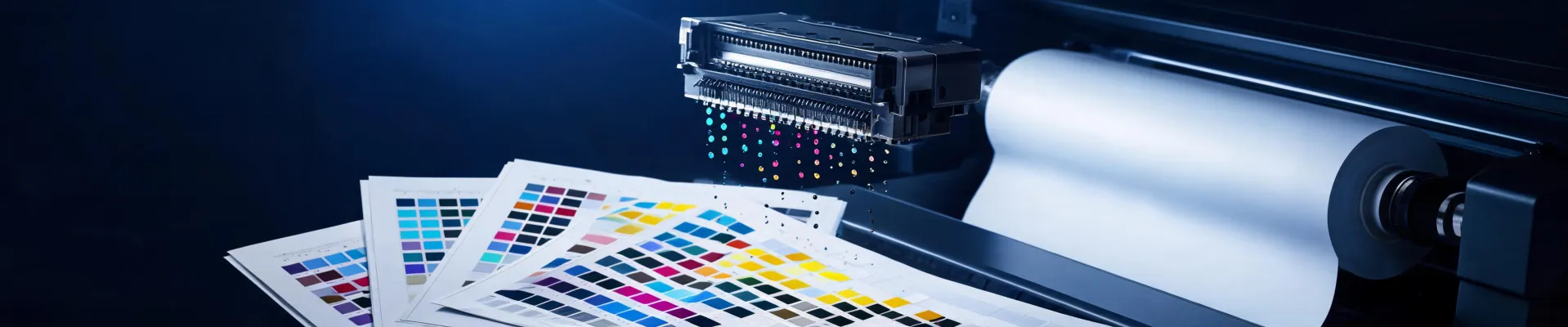
In a piezo inkjet system like Epson's, the printhead uses a tiny piezoelectric crystal that flexes when voltage is applied. That flex pushes a precise droplet of ink out of the nozzle—around 2 to 4 picoliters. Millions of droplets land on the substrate to form the image.
Inkjet printing is non-contact, which is why you can print on film, paper, fabric, or rigid panels with UV ink. The process works on anything as long as the ink is formulated for that surface and cured properly.
Why should you care? Because when a customer says "the colors look off," the problem is usually not the printer. It's the profile, the substrate, or the curing. Most operators never look at their nozzle checks until something goes wrong. By then, you've already wasted film, ink, and time. Know the process and you'll stop wasting money fixing the wrong thing. Simple.
4. Do I really need a DTF printer stand?
Honestly? Yes, if you're printing DTF with film rolls. And I'll tell you why from experience.
DTF printers feed transfer film from a roll. If that roll sits on a flimsy holder, the film's tension changes as it unspools. When tension changes, your print registration shifts. Film feeds slightly crooked, images come out misaligned, and suddenly you're inspecting rejects that could have been avoided.
A proper DTF printer stand keeps the film roll aligned and at consistent height and tension. It's basically a steel frame with a roll holder and an adjustable brake. Purpose-built models I've seen run $100 to $300, which is small next to the $3,000–$10,000 you've already spent on the printer.
DIY stands work too—I've seen shops use PVC pipe frames. But make sure it's stable. I still kick myself for the time we used a cheap stand, the roll shifted mid-print, and we ruined a 30-meter roll of film. We saved maybe $80 on the stand and wasted $150 in film. That math still annoys me. And keep the film roll covered when you're not printing. Dust on the film surface is another hidden source of rejects.
5. Why do I need a fume extractor for a DTF printer?
This is the question nobody asks before buying, and it's the one I wish more people would.
DTF printing itself uses inks, but the real atmospheric cost comes from curing: melting adhesive powder under heat releases VOC particulates. Over weeks of daily operation, those particulates build up in a room. Symptoms range from headaches and throat irritation to, long-term, more serious respiratory issues.
A fume extractor for a DTF printer should use activated carbon filters to pull airborne particles away from the work area. Look for CFM (cubic feet per minute) appropriate for your room size, and check what filter replacements cost. Don't trust vague claims. Per FTC guidelines (ftc.gov), health and air-quality claims require substantiation. If a $60 "fume extractor" says it cleans a 500 sq ft room, ask for test data. It probably won't exist.
Our first setup didn't have one. I know better now. If you're buying a fume extractor for DTF printing, get one with replaceable filters and an adjustable arm. Cheap single-filter units move air, but they don't capture VOCs effectively.
6. What quality issue catches most new shops off guard?
The environment. Not the printer, not the ink, not the operator.
Inkjet printing is sensitive to temperature and humidity. If your shop is cold or humid, the ink behaves differently. Droplets change size. Film absorbs moisture. Adhesive powder clumps.
How do I know? We ran a blind test with our team last year: same printer model, same ink, same film, two different rooms. 80% of prints from the cold room failed our color tolerance. Eight out of ten.
So before you troubleshoot ink or order new parts, check your environment. Ideally, keep the shop at 20–25°C (68–77°F) and 40–60% relative humidity. That one change reduced our reject rate more than any other fix.
7. Should I buy the cheapest Epson printer or DTF setup I can find?
I've never fully understood the "cheapest price" logic in printing equipment, because the quoted price is rarely the final cost.
Here's a pattern I've seen more than once: a budget DTF setup might quote $3,500. By the time you add a stand, fume extractor, extra film, ink, and color management, you're at $4,800. A complete setup—with all of that included—quotes $5,200 upfront. The difference? $400. And the "cheap" one still has inconsistent printheads.
Transparent pricing isn't always the lowest number on the quote. But it's the number you can plan around. Before you buy anything, ask what's not included. Get the full cost in writing. That habit alone has saved us from a few genuinely bad purchasing decisions. For most of us, the printer pays for itself through consistent production. A $400 difference upfront looks very different when it saves you two weeks of rejects.

Elise Marceau
Elise Marceau is an LED display and digital-signage systems analyst covering LED video walls, modular screens, transparent LED, control processors, and indoor or outdoor signage. She applies IEC 62368-1 safety principles while comparing pixel pitch, luminance, contrast, refresh rate, colour uniformity, viewing angle, ingress protection, power density, module serviceability, and signal redundancy. Her specification guides help integrators, venue operators, retailers, and procurement teams align viewing distance, ambient light, content format, installation access, electrical load, and lifecycle support.