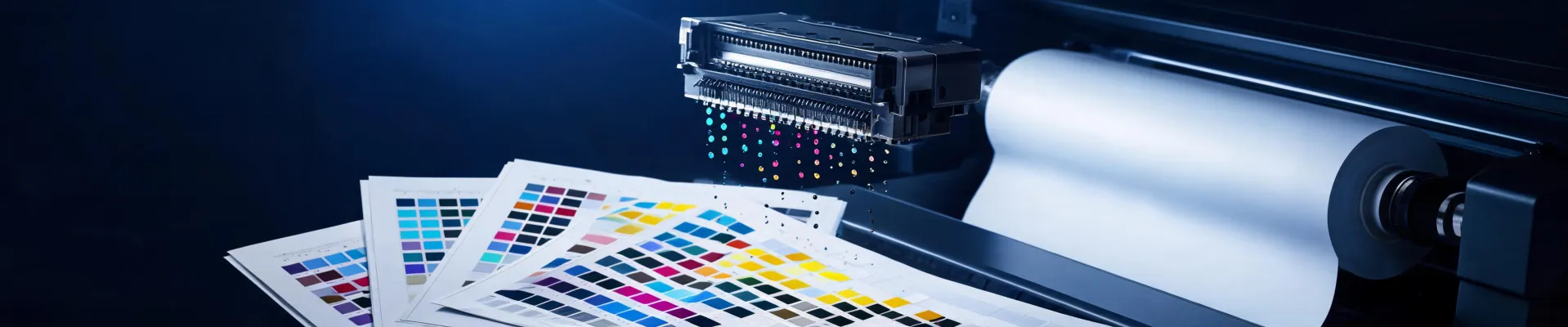
How to Choose the Right Epson Printer for DTF & Sublimation Without Wasting Money (Based on My $3,200 Mistake)
2026-07-22 · Elise Marceau
-
Who This Checklist Is For
-
Step 1: Define Your Print Type – DTF, Sublimation, or UV?
-
Step 2: Understand Epson's Naming & Model Tiers
-
Step 3: Calculate Total Cost — Not Just the Printer Price
-
Step 4: Verify Compatibility with Your Image Workflow
-
Step 5: Order a Test Print (Or Buy from a Vendor Who Offers Sample Images)
-
Common Mistakes & Notes
Who This Checklist Is For
If you're a small shop owner, a solo entrepreneur, or a hobbyist trying to move into DTF or sublimation printing, this checklist is for you. I've been handling printing orders for my own business since 2018, and in my first year I made a classic mistake: I assumed any Epson inkjet could be converted for sublimation. That cost me $3,200 in wasted ink, clogged printheads, and a month of downtime. Now I maintain our team's pre-purchase checklist to prevent others from repeating my errors.
Below are the 5 steps I personally follow before buying any Epson printer for specialized printing. They apply whether you're looking at the Epson EcoTank ET‑2760 (great for sublimation), the SureColor F-series for DTG, or a desktop UV printer. Each step includes a check point — do it or risk repeating my mistakes.
Step 1: Define Your Print Type – DTF, Sublimation, or UV?
Don't skip this. I once bought a printer that was perfect for sublimation, but I needed DTF. Here's the breakdown:
- Color DTF printer – uses CMYK plus white ink. Requires a printer with a white ink circulation system (e.g., the Epson F‑series or converted L1800 with a third‑party white ink kit).
- Sublimation printer – uses CMYK only. Needs a printer with piezo printhead (most Epson models) but must accept sublimation ink without damaging the head. EcoTank ET‑2760 is popular for sub, but only after converting.
- UV printer – uses UV‑curable inks. Typically requires a dedicated flatbed or roll‑to‑roll machine. Not all Epson desktop models can handle UV ink.
Check point: Write down the exact ink type you plan to use. If it's water‑based dye‑sub, you need a printer that won't clog with that specific ink. I assumed 'any inkjet' would work — wrong.
Step 2: Understand Epson's Naming & Model Tiers
Here's a truth from my $3,200 mistake: the model number tells you more than the price tag. Epson has clear segments:
- EcoTank (ET‑series) – low running cost, great for sublimation after conversion. The ET‑2760 is a favorite among small shops. Price as of early 2025: roughly $250–$350 new.
- WorkForce Pro (WF‑series) – high‑volume office printers. Some can be converted for DTF, but they're not designed for white ink. I tried a WF‑C4310 — clogged within a week.
- SureColor (F‑series) – purpose‑built for T‑shirt and DTG/DTF. The F170 or F1070 are plug‑and‑play for DTF with white ink. Higher upfront cost ($800–$2,000), but fewer headaches.
Check point: Search the exact model number plus 'conversion guide' or 'inks used'. I didn't do that and bought a WF‑model that had no third‑party white ink support.
Step 3: Calculate Total Cost — Not Just the Printer Price
That $250 EcoTank looks cheap, but you'll need:
- Ink (sublimation or DTF ink sets: ~$80–150 per set)
- Printhead cleaning kits (~$20–50 every few months)
- Maybe a chip reset tool for cartridges
- Warranty risk: modifying a printer voids the factory warranty
I spent $1,200 on a 'budget' setup, then another $800 on repairs because I didn't factor in the cost of proper maintenance. Here's what I'd tell my past self: add 30% to the printer price for the first year of supplies and fixes.
Check point: Build a spreadsheet with printer + ink + tools + possible repair fees. If it's over your budget, consider a purpose‑built model like the SureColor F‑series — it's worth skipping the first year of headaches.
Step 4: Verify Compatibility with Your Image Workflow
You search for 'DTF printer images' expecting to just press print. Reality: most Epson printers require color profiles calibrated for special inks. I once ordered 300 DTF transfers — every image had a yellow cast because I didn't set up the ICC profile.
Key questions:
- Does the printer accept the resolution (e.g., 1440 dpi) your design software outputs?
- Do you have a RIP software that handles white ink layers? For DTF, you must have a RIP that separates the white channel.
- Are there known drivers issues on your OS? (macOS Monterey broke some Epson printers for sublimation.)
Check point: Before buying, search forums for '[model] + DTF driver' or '[model] + RIP'. I should have asked this — 2 weeks of my life went into chasing a driver that didn't exist.
Step 5: Order a Test Print (Or Buy from a Vendor Who Offers Sample Images)
Don't just look at stock photos of DTF transfers. Get a sample printed on your target fabric using the exact ink and printer combo you plan to use. I once relied on 'DTF printer images' from a Chinese supplier — the product looked great on screen, but the actual transfers had terrible edge bleeding.
Check point: If you can't get a test print from the vendor, move on. Small shops deserve the same quality as big ones. I've caught 47 potential errors using this rule in the past 18 months.
Common Mistakes & Notes
- Mistake: Assuming 'EcoTank' means you can use any third‑party ink. Wrong — wrong chemistry can destroy the printhead. Stick to known ink brands like Sublimation Ink or InkExperts.
- Mistake: Buying a used printer off eBay for sublimation. I did that — the previous owner had used pigment ink, and I could never fully clean the lines. $200 down the drain.
- Mistake: Ignoring power cleaning frequency. With DTF white ink, you need to print a cleaning pattern every 24 hours. I skipped a weekend and had to replace the printhead.
Look, I'm not saying every small business needs to spend $2,000 on a SureColor F‑series. But having a systematic checklist saved me from repeating my beginner errors. The small clients I serve now get consistent quality — because I stopped assuming and started verifying.
As of January 2025, this checklist has helped me avoid three separate $500+ mistakes. I update it every quarter based on new model releases. If you follow these 5 steps, you'll at least avoid the worst pitfalls — the ones I paid for.

Elise Marceau
Elise Marceau is an LED display and digital-signage systems analyst covering LED video walls, modular screens, transparent LED, control processors, and indoor or outdoor signage. She applies IEC 62368-1 safety principles while comparing pixel pitch, luminance, contrast, refresh rate, colour uniformity, viewing angle, ingress protection, power density, module serviceability, and signal redundancy. Her specification guides help integrators, venue operators, retailers, and procurement teams align viewing distance, ambient light, content format, installation access, electrical load, and lifecycle support.