What Printer Is Best for Sublimation? A 36-Hour Rush Job Taught Me (Plus Epson All-in-One and Ticket Printers)
2026-08-11 · Elise Marceau
In February 2024, at 3:47 PM on a Thursday, a client named Maya called. Her two-person startup was running a pop-up showcase that Saturday for 400 attendees. She needed tickets, a stack of brochures, 50 custom t-shirts, and 20 acrylic sign holders. The original print vendor had ghosted her — no phone, no email, no product. She'd also already paid that vendor a 50% deposit, which they kept. So this job was partly a salvage operation.
Normal turnaround for all that is four or five business days. We had about 36 hours. Maya was a brand-new customer with a total budget around $900. Not the kind of account most shops scramble for. But as she described the job, I realized we already had most of the pieces — and the ones we didn't, we could rent.
The Inventory Check
Here's what was sitting in our small production room: an Epson WorkForce Pro WF-C4310 (pretty much the definition of an all-in-one printer — print, scan, copy, fax, plus automatic document feeding), an Epson ticket printer in the form of the TM-T88VI, and an Epson SureColor F170 for sublimation. That covered three out of four needs.
None of this was planned. We'd bought the TM-T88VI for a restaurant client that later closed, and the WorkForce Pro was the office default. The F170 was the one intentional purchase, bought after a local apparel maker convinced me that sublimation was the future.
Ticket printing might sound niche, but it's actually straightforward. The TM-T88VI is a thermal ticket printer — no ink cartridge to swap, just paper rolls. For 800 tickets, it zipped through at a few seconds a piece. Granted, it's more often used for restaurant receipts, but it handles event tickets just as well.
For the brochures, the WorkForce Pro WF-C4310 is not the fastest machine in the world. I'd describe it as a workhorse, not a racehorse. But with four high-yield cartridges in the tray, it printed 200 half-page brochures without a hiccup. The cost-per-page is the real reason I use it; one black high-yield cartridge can handle around 2,300 pages. For a small shop, that's a lot less financial drama than a $50 inkjet cartridge that dies after 200 pages.
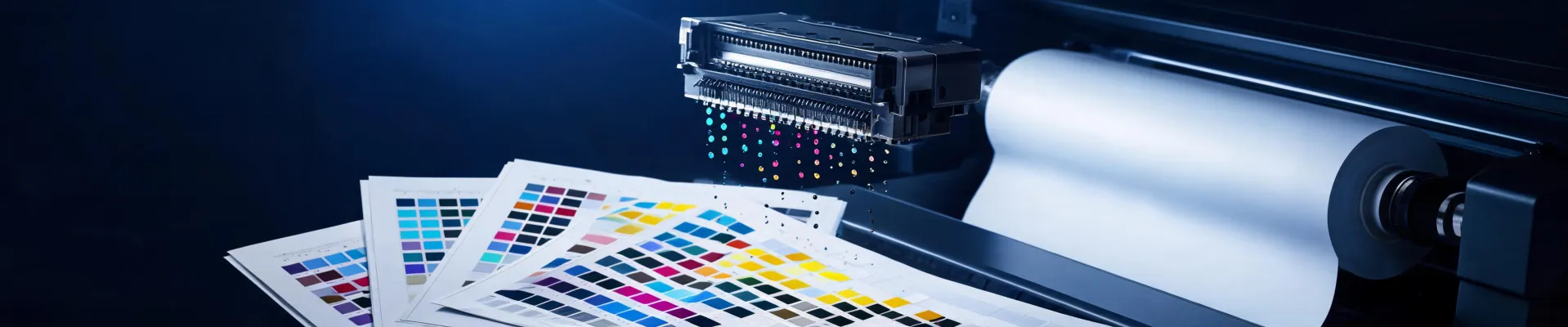
Then came the t-shirts. This is where people usually ask me directly: What printer is best for sublimation printing? I used to say "look for one with a Piezo printhead" — but honestly, that's jargon. The practical answer is: use a printer designed for sublimation from day one, not a converted standard printer. Our Epson SureColor F170 is purpose-built for that. It uses special sublimation inks and is made to work with a heat press on polyester fabrics. In my opinion, a dedicated sublimation printer is worth the extra money because a converted machine is a gamble. (I learned that the hard way a few years ago — more on that later.) The F170's list price is around $899 based on Epson's official product page as of January 2025; street prices vary, so verify before you buy.
If you've seen those "DIY sublimation printer hack" videos, skip them. The risk isn't worth it. The ink profiles, the printhead behavior, the heat settings — all of it is tuned specifically for a dedicated sublimation model.
The Tabletop UV Printer Question
Now, the acrylic sign holders. This is where a small order nearly turned into a disaster. The signs needed to be printed on clear acrylic — something a standard inkjet can't do. A UV printer can, because UV ink is cured by ultraviolet light and adheres to non-porous materials like acrylic, glass, and metal.
Maya had already been searching online for a tabletop UV printer. She'd found a machine called the Yotta UV printer — a compact desktop model — for a price that seemed too good to miss. "Should we just buy it?" she asked. That would have been a serious mistake, and I'm glad we didn't go down that path.
To be fair, the Yotta UV printer and similar tabletop models have their place. For someone printing keychains and phone cases every day, a cheap desktop UV unit might be a reasonable hobbyist purchase. But for a one-time event deadline? Buying a $1,500 machine to print twenty signs is wasteful. More importantly, cheap UV printers often need fiddling — head alignment, ink settling, test prints. It's a learning curve you don't want during a 36-hour countdown. And you can't just plug one in; you need airflow, ventilation, and time to babysit it.
Instead, I called a local print shop with a tabletop UV printer and asked if they could do twenty acrylic bases in a day. They said yes, but only with a rush fee. When I asked for timeline, they said "if it's done tomorrow, it's $100 extra. Today, it's $200 extra." That's typical of rush printing (based on fee structures from most online printers, 2–3 day rush is around +25–50%; same-day can be +100% or more). I paid the $200 because we had no other choice.
The surprise wasn't the price difference. It was how much hidden value came with the "expensive" option — support, revisions, and quality guarantees. In a small job, that hidden value is what saves you at 11 PM.
The Unexpected Plot Twist
Then the real test came. Maya called back at 9 PM that night in a minor panic: the printer had said the acrylic panels would be scratched because the material was too thin. We had to upgrade to a thicker acrylic at the last second. It added another $85, but saved the entire job. (Moral: protect yourself from my old mistake and add a 48-hour buffer to every deadline — our company policy now requires it.)
That policy came from a hard lesson. In my first year, I made the classic prepress error: tried to save $40 by having a client send compressed files. That led to a $300 reprint when the fonts didn't embed properly. Since then, I always ask for a PDF/X-1a and always run a test print. It's not the printer's fault, but the workflow around it matters just as much.
In March 2023, a different vendor failure cost us a $12,000 contract. That's when I stopped gambling on compressed schedules and started building in buffer time. The $85 upgrade was annoying, but compared to that past loss, it was nothing.
The Delivery
Saturday morning, 7 AM. Maya's pop-up opened at 10. We delivered all 800 tickets, 200 brochures, 50 t-shirts, and 20 acrylic holders to her car. She paid the final invoice and said the vendor who ghosted her had "underestimated the power of a small order." I told her that the real power was in not writing her off just because her budget was under a grand. Small doesn't mean unimportant — it means potential. The vendors who treated my $200 orders seriously when I was starting out are the ones I still use for $20,000 orders today.
What I'd Tell Someone in the Same Spot
If you're trying to decide which Epson printers make sense in a small production environment, here are my quick takeaways:
- Epson all-in-one printers (like the WorkForce Pro or EcoTank models) are a solid foundation for everyday documents and small runs. EcoTank models, in particular, have a very low cost per page because you refill an ink tank instead of replacing cartridges.
- Epson ticket printers like the TM-T88VI are proven for receipts and event tickets. Just remember they're thermal, so there's no ink to worry about — only paper rolls.
- For sublimation, the best printer is one designed for it. In the Epson lineup, that's the SureColor F-series (F170, F1070). They use special sublimation ink and produce vibrant results on polyester. There are a lot of online tutorials that oversimplify converting a regular EcoTank, but I'd avoid that risk unless you're prepared for poor prints and a voided warranty.
- For acrylic or hard-surface work, a tabletop UV printer (brands like Yotta show up a lot in search results) can work — but for one-off urgent jobs, outsourcing is often cheaper and safer than buying. If you do buy one, leave time to learn it. It's not plug-and-play.
One more thing: every now and then, a small order is the beginning of a long relationship. Since Maya's event, she's sent us three more jobs, each bigger than the last. The $900 rush job is now a $4,000 monthly account. To me, that's the real case for taking small clients seriously.
Anyway, those are my notes from an unforgettable 36 hours. And if you're ever in the middle of a similar scramble, remember: the right printer is the one you can count on at 11 PM, not just the one that looks good in a spec sheet.

Elise Marceau
Elise Marceau is an LED display and digital-signage systems analyst covering LED video walls, modular screens, transparent LED, control processors, and indoor or outdoor signage. She applies IEC 62368-1 safety principles while comparing pixel pitch, luminance, contrast, refresh rate, colour uniformity, viewing angle, ingress protection, power density, module serviceability, and signal redundancy. Her specification guides help integrators, venue operators, retailers, and procurement teams align viewing distance, ambient light, content format, installation access, electrical load, and lifecycle support.